In our modern world, it can become easy to take a lot of things for granted. The cars we drive, the roads on which we drive, the bigger-than-life buildings we pass without batting an eye – we’ve become used to things that would leave people not too far in the past in total awe. That doesn’t mean, however, that we don’t see something every once in a while that can stop us in our tracks. Below, you’ll find one of these things.
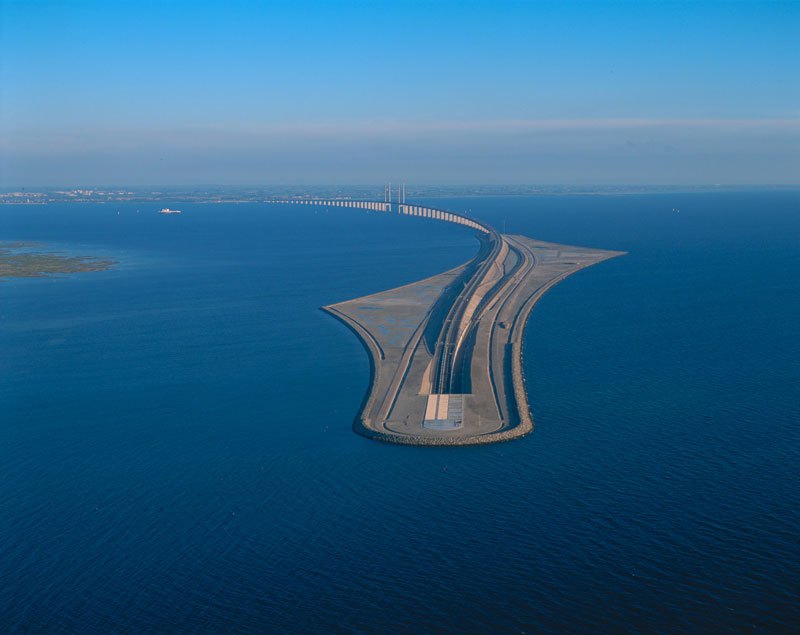
This is the Øresund, an ingenious feat of engineering that connects Copenhagen, the capital of Denmark, to Malmo, a city in Sweden.
 Øresundsbro Konsortiet
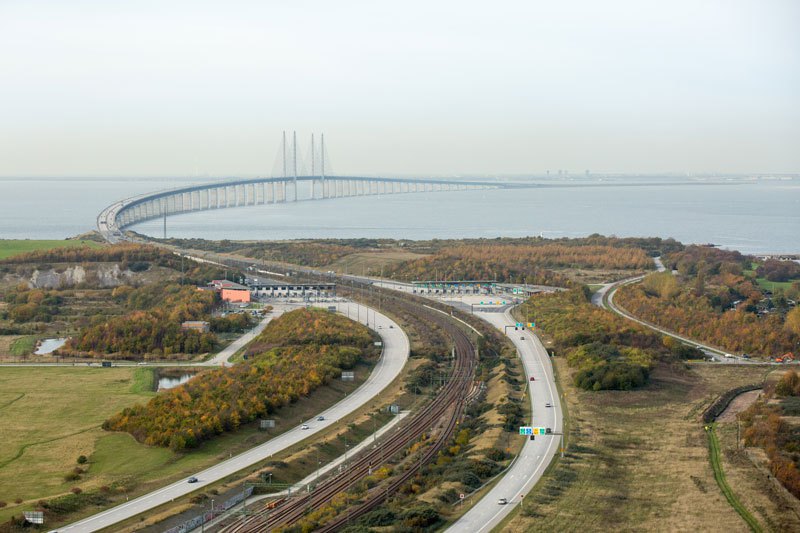
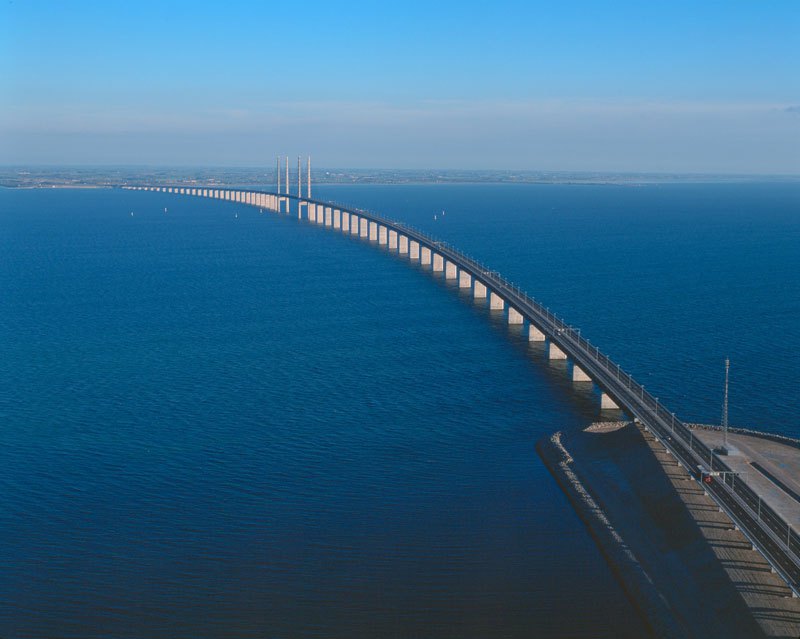
This is what it looks like from the other side. It’s a bridge that transitions to a tunnel, taking travelers from Denmark to Sweden underwater.
 Øresundsbro Konsortiet
The bridge is about 5 miles long, leading to a manmade island that becomes the tunnel.
 Øresundsbro Konsortiet
This impressive structure was designed by COWI, a Danish engineering firm. The team was lead by architect George K.S. Rotne.
 Øresundsbro Konsortiet
The bridge and tunnel are operated by both countries, and there is a toll required to use them.
 Øresundsbro Konsortiet
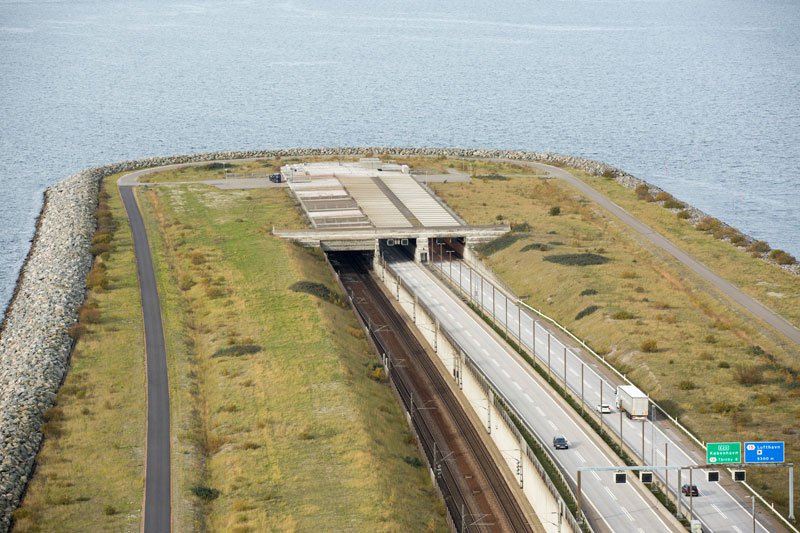
The manmade island that links the bridge to the tunnel is called Peberholm. It was made from material taken up from the seabed beneath.
 Øresundsbro Konsortiet
On the island, plants and animals are allowed to live freely. This has made it a hotspot for biologists, who have identified over 500 different types of plants that now call the island their home. It’s also the habitat of a rare toad.

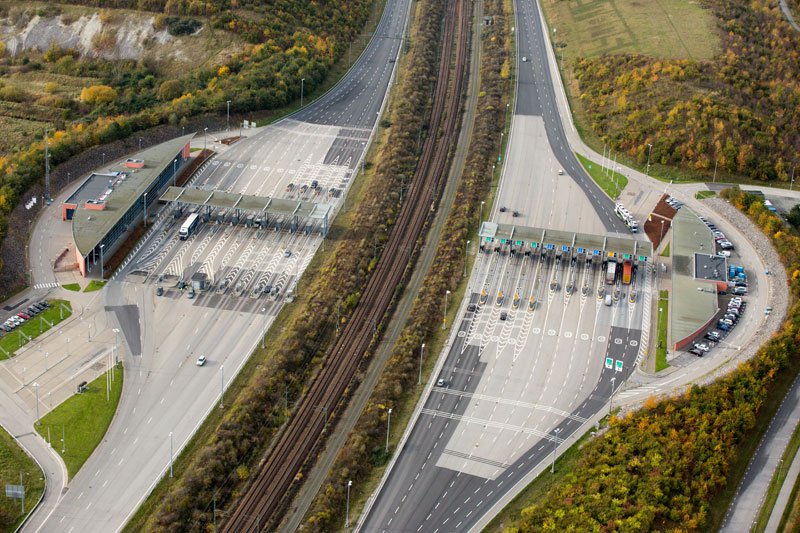
Here, you can see the toll stations and the railway, which also operates on the structure.
 Øresundsbro Konsortiet
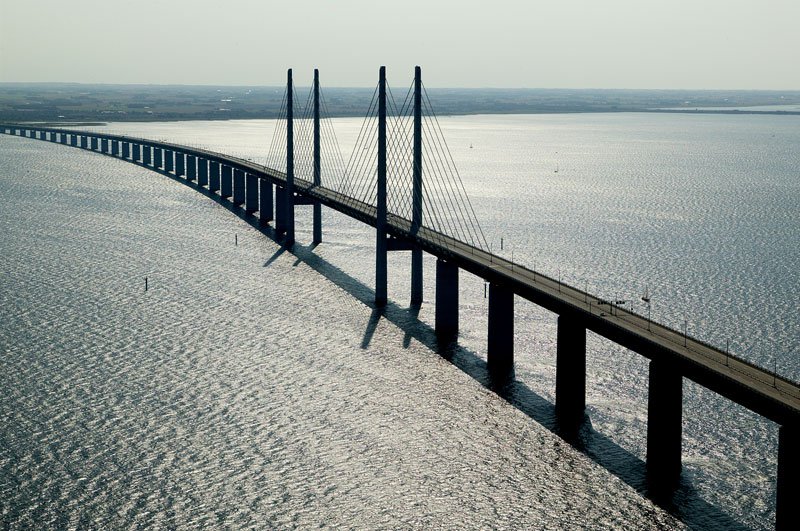
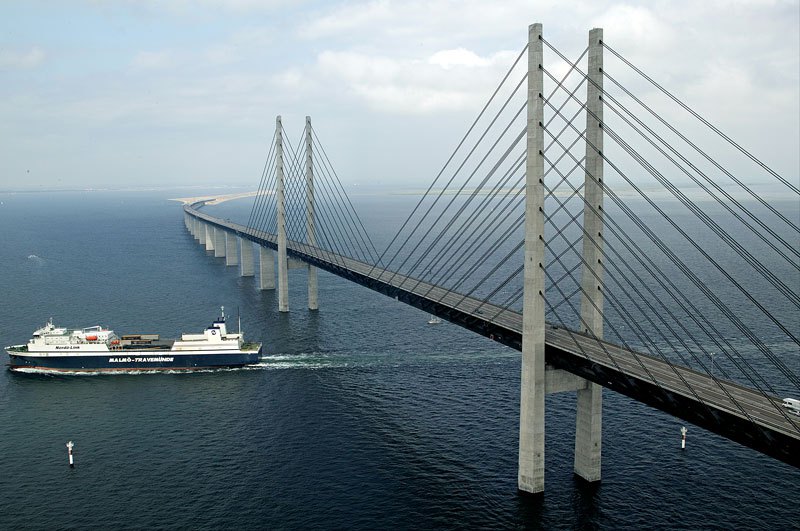
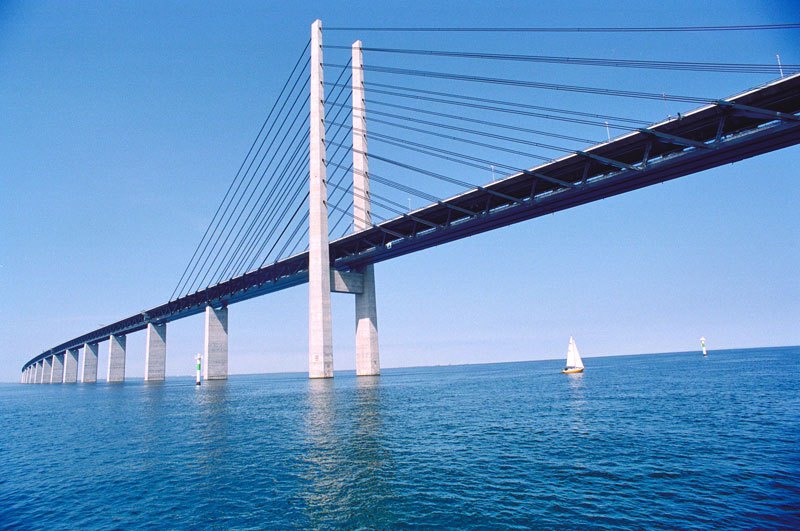
The pylons were the only pieces of the bridge to be constructed where it stands. The rest was built on land and placed by floating cranes.
 Øresundsbro Konsortiet
The bridge, which spans across the Flinte Channel, holds cars on the upper level and the railway beneath. The two pilons, which are around 670 feet tall, support the bridge.
 Øresundsbro Konsortiet
Since its opening, on July 1, 2000, this award-winning structure has provided 3.7 million residents with the route that allows them to work on either side.
 Øresundsbro Konsortiet
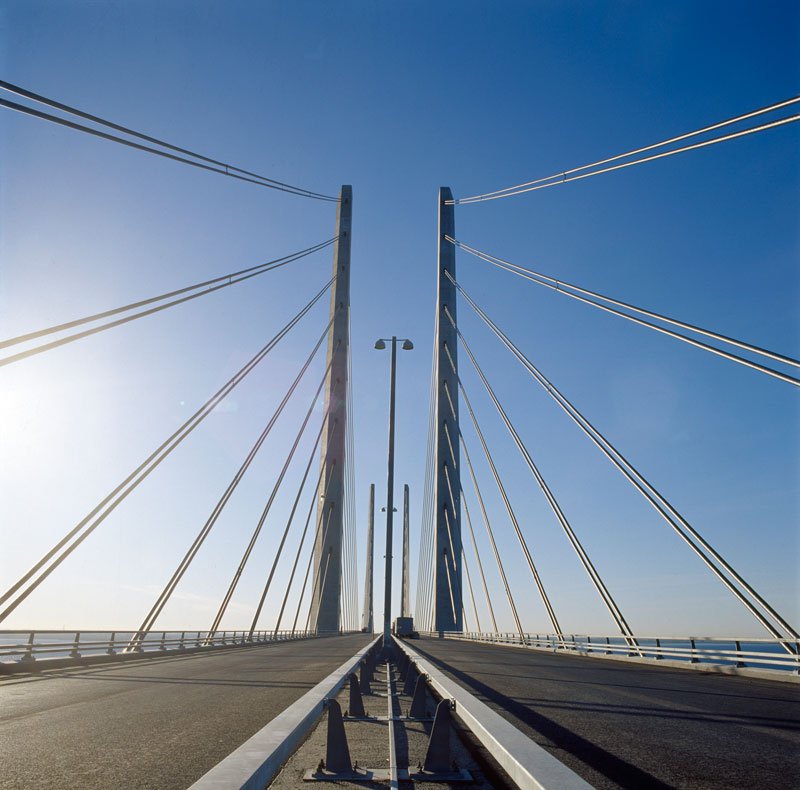
The journey between Copenhagen and Malmo takes just over 30 minutes, and over 65 percent of the people who use this route travel by train.
 Øresundsbro Konsortiet
This structure is proof of the amazing things that can happen when a practical need meets a creative solution.
 Øresundsbro Konsortiet