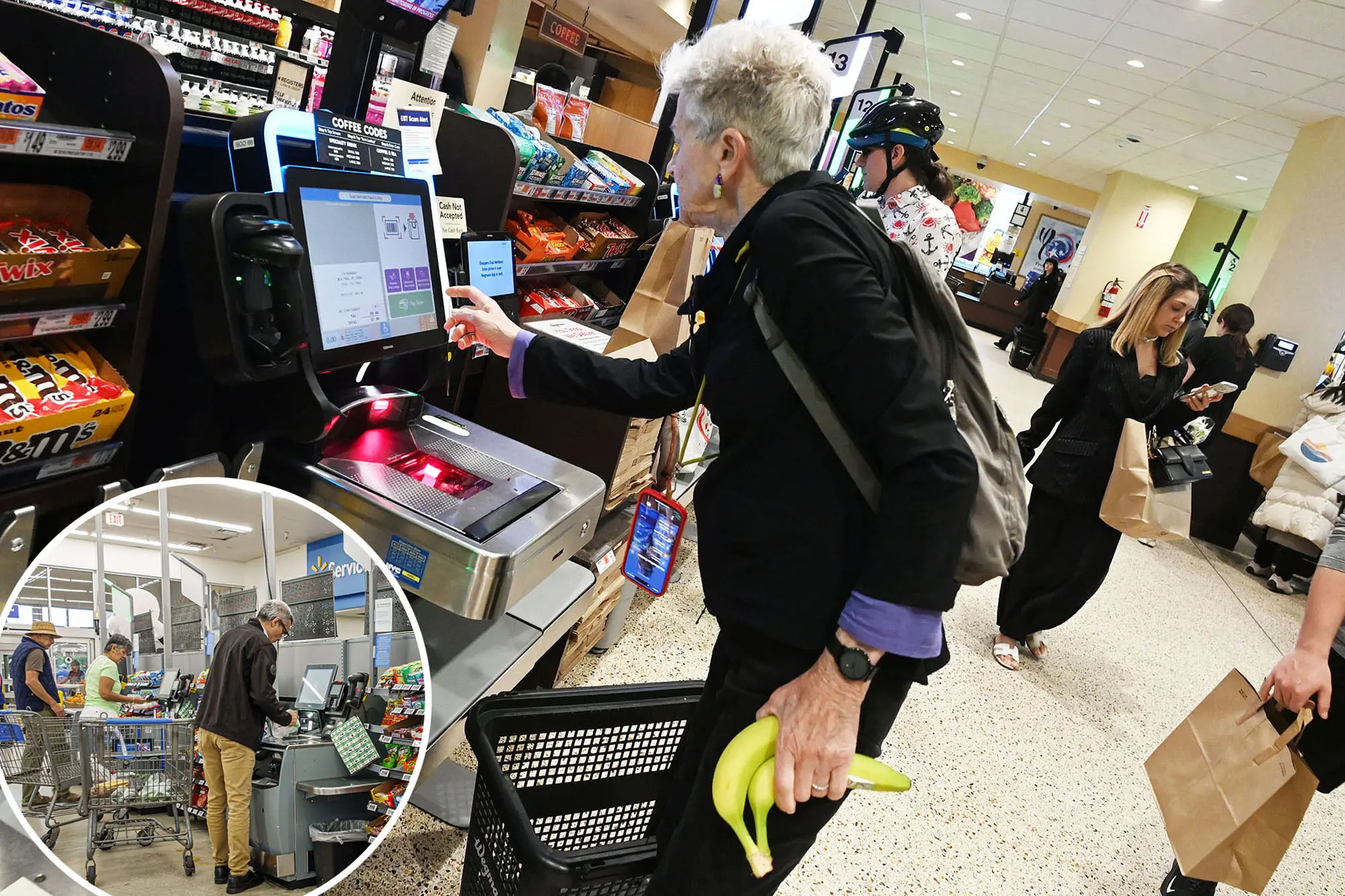

Among them, Walmart has begun eliminating self-checkout machines as part of an ongoing reassessment of its automation strategy.
The company has gradually removed the kiosks from select stores, opting instead to return to traditional cashier-staffed lanes. The latest store to phase out self-checkout was in South Philadelphia, according to The Philadelphia Inquirer.

Retailers are pulling back on self-checkout machines — and customer service may not be the only reason.
A spokesperson for Walmart told the outlet the shift is focused on improving the shopping experience, framing it as a way to reduce wait times and boost efficiency.
“These changes are guided by feedback from associates and customers, local shopping patterns, and the needs of the business in each community,” the spokesperson said, adding the move is intended to “improve the checkout experience and enable associates to provide more personalized customer service.”
However, self-checkout systems are also highly susceptible to theft, and many experts argue that rising shoplifting is a key factor behind the rollback.
A December 2025 survey by LendingTree found that 69% of users believe self-checkout makes it easier to steal. The survey also revealed that a significant number of shoppers admitted to taking items — whether deliberately or by mistake — when using the kiosks.

A LendingTree survey found that 69% of self-checkout users believe the systems make it easier to steal.
The study also reported that 27% of respondents admitted they have intentionally taken an item without scanning it. In addition, 36% said they have accidentally left a store with an unscanned item, and among those users, 61% acknowledged they still kept the item despite the mistake.
“Largely unattended self-checkouts provide a potential opportunity for folks to help themselves,” said Matt Schulz, chief consumer finance analyst at LendingTree. “Even though people know that stealing is wrong and most understand the risk they’re taking, tough times require tough choices, and lots of people are clearly willing to take a risk.”
Retail analyst Neil Saunders also noted that self-checkout systems can contribute to higher theft rates due to both intentional actions and accidental errors, he told the Daily Mail.

Self-checkout kiosks are widely viewed as highly vulnerable to theft, and some experts argue that rising shoplifting rates are a key reason retailers are reducing their use.
“Forcing more customers to use manned checkouts resolves a lot of these issues and saves retailers money,” one analyst noted.
Retail expert Bryan Gildenberg told the Daily Mail that Walmart adjusts its use of self-checkout based on store-specific conditions. “Walmart regularly reviews stores based on theft and customer experience and takes self checkout out of their highest theft stores,” he said. “I would not read much more into it than that.”
Walmart is not alone in scaling back the technology. In 2024, Dollar General removed self-checkout systems from 12,000 stores nationwide.
Last year, Sam’s Club, a Walmart subsidiary, announced it would phase out traditional self-checkout machines in favor of AI-powered “Scan & Go” technology.
Costco has also begun rolling out similar systems, though it has not indicated plans to fully eliminate self-checkout. In some locations, employees scan items directly in customers’ carts before payment is completed at the register using a membership card.
Meanwhile, several states — including California, Connecticut, Massachusetts, New York, Ohio, Rhode Island, and Washington — have been considering legislation that would regulate self-checkout use. Proposed measures include requiring a balance between staffed and self-service lanes, setting minimum staffing levels per kiosk, and limiting the number of items allowed in self-checkout transactions, according to USA Today.

“Forcing more customers to use manned checkouts resolves a lot of these issues and saves retailers money,” retail expert Neil Saunders said.
Earlier this year, New York City Council member Amanda Farías (D-Bronx) introduced an amendment to the city code that would place new limits on self-checkout use in supermarkets and pharmacies across the city.
The proposal includes a 15-item cap for shoppers using self-checkout lanes, as well as a requirement for one employee per every three self-checkout stations.
“We’ve seen the consequences of removing workers from these spaces: increased retail theft, less oversight, fewer protections for both workers and customers and generally decreased safety,” Farías said when introducing the legislation.