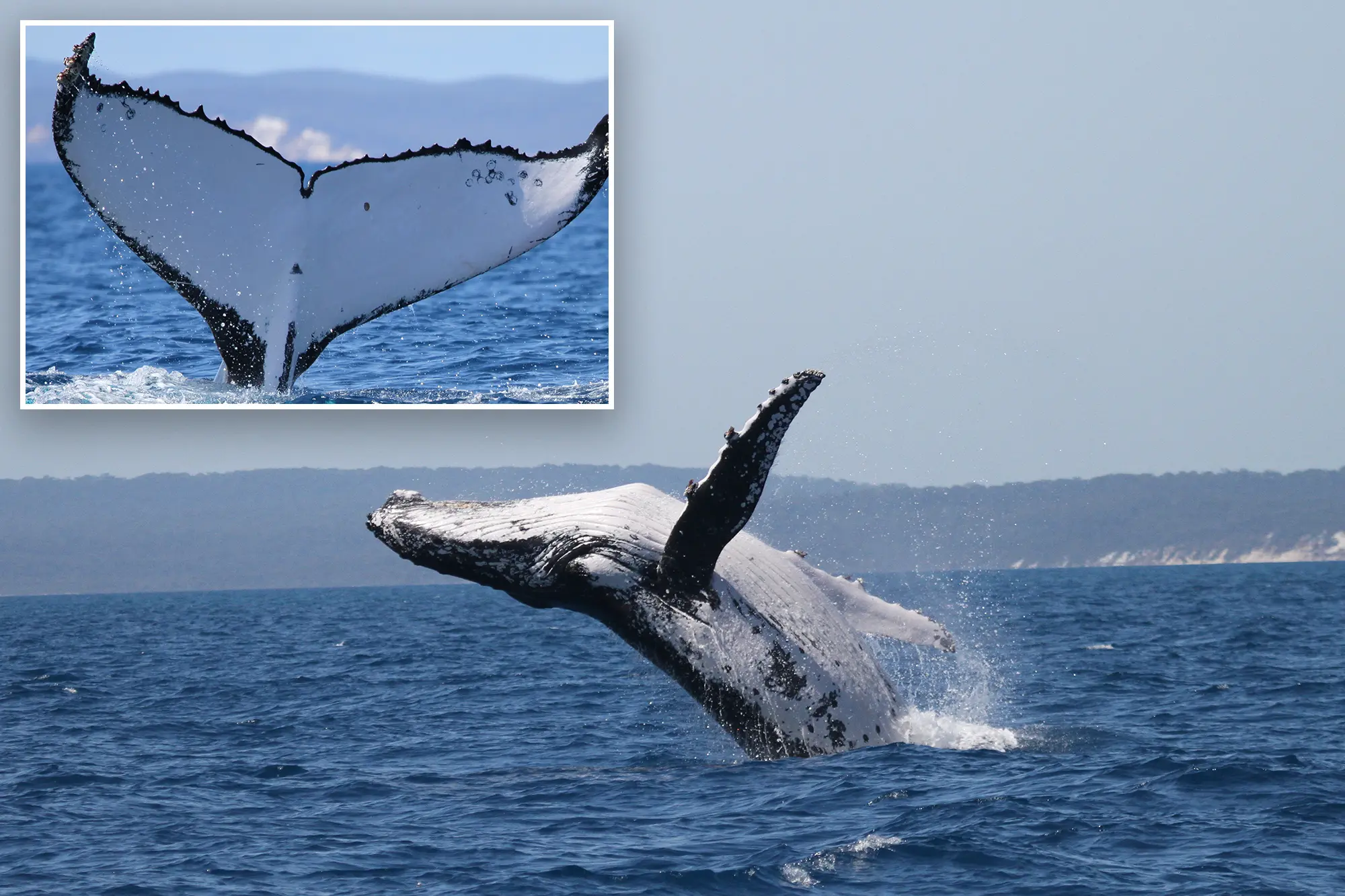

Scientists have identified two humpback whales that completed record-breaking journeys between Australia and Brazil, spanning roughly 9,000 miles (14,500 kilometers).
Researchers confirmed the whales through their unique tail markings, which matched sightings in both locations despite the vast distance.
The whales traveled in opposite directions and have now been recorded as the longest-known migrations for humpback whales to date.


The tail markings of a humpback whale, recorded at breeding sites in both Australia and Brazil, have been documented in new research highlighting an extraordinary migration.
“It’s a very rare event, but it is a really wonderful demonstration of just how wide-ranging these animals are,” said Phillip Clapham, former head of a NOAA whale research program who was not involved in the study.
Humpback whales are known for long-distance migrations across the world’s oceans, typically following established routes passed down from their mothers.
They spend warmer months feeding on krill and small fish, then migrate to tropical waters to breed during winter.
Because they spend most of their lives underwater, tracking their movements is challenging for researchers.
In this study, scientists examined more than 19,000 whale images collected over four decades by research teams and citizen scientists.
Using image recognition software, they matched individual whales by their unique tail patterns, including coloration and jagged edges.
The analysis identified two separate whales seen at breeding sites in eastern Australia and Brazil, indicating they had traveled between the two regions over time.